
Signs of water damage that needs repair
Repair is needed when materials have been physically changed by water: stained, swollen, warped, softened, or moldy. Drying stops the damage but doesn't reverse it.
- Brown or yellow stains on ceilings and walls
- Drywall that is soft, sagging, crumbling, or has open seams and popped screws
- Paint that is bubbled, peeling, or flaking
- Baseboards and door casings that are swollen or separating at the joints
- Laminate with raised seams, vinyl that has lifted, or wood floors that stayed cupped
- Cabinet bases and toe-kicks that have swollen or delaminated
- Subfloor that feels spongy or uneven underfoot
- Doors that no longer close because the frame or slab has swelled
Old damage counts too. A stain from a leak years ago is worth opening up if it was never properly dried.
Why repairs must wait for dry readings
The most common mistake after a leak is rebuilding too soon. New drywall hung on damp studs, flooring laid over a subfloor that still holds moisture, and paint rolled over a wall that feels dry but isn't: each one seals moisture in, and the result a few weeks later is mold behind the new work, flooring that cups or gaps, and paint that peels. A moisture meter reading against a dry reference area in the same house takes a minute and prevents all of it. If your home wasn't professionally dried after the leak, we start there, with structural drying if the readings call for it.
What water damage repair includes
Drywall and plaster
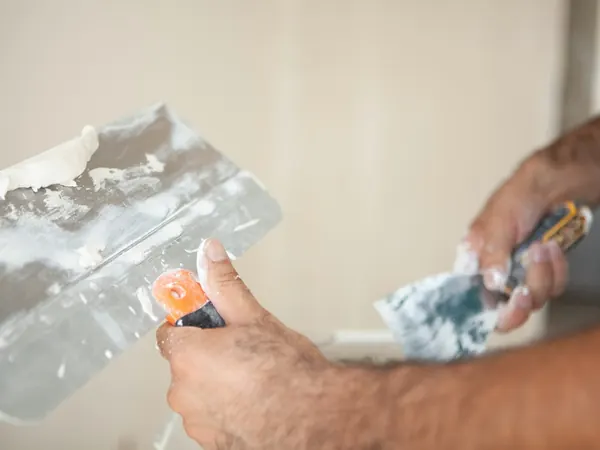
Damaged sections are cut back to solid, dry material and to the center of a stud or joist. New board is hung, taped, finished, and textured to match. Plaster is patched with compatible material or, where it has failed over a large area, replaced with drywall shimmed to the original thickness.
Insulation
Wet wall and ceiling insulation removed during drying is replaced before the cavity is closed.
Flooring
Carpet pad and carpet, laminate, vinyl plank, tile underlayment, and hardwood are repaired or replaced as needed. Subfloor that has swollen or delaminated is cut out and replaced first. See hardwood floor water damage repair and carpet restoration.
Trim and doors
Baseboards, casings, and shoe molding are reinstalled or replaced and caulked. Swollen doors and jambs are replaced.
Cabinets and built-ins
Swollen particleboard cabinet boxes and toe-kicks are replaced. Solid wood cabinets often need only drying and refinishing.
Ceilings
See ceiling water damage repair for drywall and plaster ceilings and texture matching.
Priming and painting
Stained but sound surfaces get a stain-blocking primer, then paint. Repaired walls are usually painted corner to corner so the patch doesn't show.
How a repair job runs
Moisture verification
Readings confirm the framing, subfloor, and remaining finishes are dry.
Written scope
A room-by-room list of what will be replaced and with what, which is also what an insurer needs.
Any hidden damage addressed
Rot, mold, or damaged framing found when surfaces are opened is dealt with before closing up. See mold remediation.
Rebuild
Insulation, drywall, flooring, trim, cabinets, then paint, in that order.
Walkthrough
You check the finished work with us and note anything that needs adjustment.
Plumbing, electrical, and HVAC repairs are done by trades licensed for that work, and we'll tell you when one is needed.
Permits and older homes in Winston-Salem
2 local points affect repair planning. First, permits. Replacing drywall, flooring, and trim in a house doesn't normally require one.
Repairs to load-bearing framing and changes to plumbing, electrical, or HVAC systems generally do under North Carolina law, whatever the job costs. Inside city limits the City of Winston-Salem Inspections Division is the office to ask, and outside them the county or town inspections office. Second, age.
A large part of the city's housing was built before 1978, the year lead-based paint was banned for homes. Repair work that disturbs painted surfaces in those houses has to follow lead-safe practices, and textured ceilings and old flooring may need to be checked for asbestos before they're cut or sanded. Both add steps, and it's better to know before the work is priced.
What affects the cost of water damage repair
Repair cost depends on how much material is replaced, the quality of the finishes being matched, and whether hidden damage turns up when surfaces are opened.
- Area and number of rooms. Square footage of drywall, flooring, and paint.
- Finish level. Site-finished hardwood, plaster, tile, and custom cabinetry cost more to match than carpet and drywall.
- Matching. Blending new flooring or texture into old can mean refinishing or repainting a larger area than was damaged.
- Hidden damage. Rotted subfloor, damaged framing, or mold discovered during the work.
- Older-home requirements. Lead-safe work practices or asbestos testing.
- Permits and other trades. Structural, plumbing, or electrical work.
- Your choices. Upgrading materials instead of matching what was there.
We price repairs from a written scope after seeing the damage.
When water damage repair is urgent
Most repair work is scheduled. The exceptions involve safety: a ceiling that is sagging or has partly fallen, a floor that feels soft enough to give way, wet or damaged electrical fixtures, and an opening in the roof or an exterior wall. Those need attention the same day. If the leak is recent and the area hasn't been dried, that is an emergency water damage call.
After the repair
Watch repaired areas through the next heavy rain or the next few weeks of normal plumbing use. A stain that reappears means the source wasn't fully fixed. New caulk and paint need a few days to cure before scrubbing.
Keep the moisture records and the scope with your house papers. They're useful when you sell.
Repair is the last phase of our water damage restoration work in Winston-Salem, after extraction and drying.
Water damage repair questions
What is the difference between water damage restoration and water damage repair?
Restoration, also called mitigation, is the emergency phase: extracting water, removing ruined materials, and drying the structure. Repair is the rebuilding afterward: drywall, insulation, flooring, trim, and paint. The first stops the damage. The second puts the house back together.
Can water-damaged drywall be repaired without replacing it?
Drywall that got wet with clean water, dried quickly, and stayed flat and firm can often be kept, then sealed with a stain-blocking primer and repainted. Drywall that is soft, swollen, sagging, crumbling, moldy, or was wet with contaminated water is cut out and replaced.
How soon after a leak can repairs begin?
As soon as moisture readings show the remaining materials are dry, typically 3 to 5 days after drying starts on a clean-water loss, longer for hardwood, plaster, and crawl space framing. Starting sooner traps moisture.
Can I just paint over a water stain?
Only after the leak is fixed and the area is confirmed dry. Then use a stain-blocking primer first, because ordinary paint lets the stain bleed back through. If the stain keeps growing or the surface is soft, the problem isn't cosmetic.
Does insurance pay for the repairs?
When the water loss is covered, the policy generally pays to restore the damaged areas to their prior condition, less your deductible. Upgrades are at your cost. The item that failed, such as the pipe or appliance, is often not covered. Your insurer decides.