
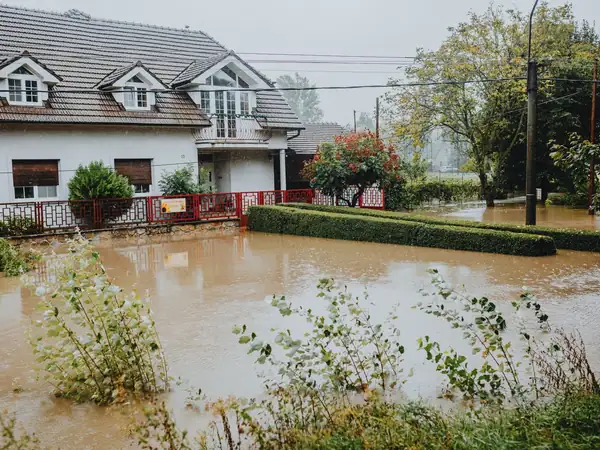
What flood damage looks like
The marks of a flood are a horizontal water line on walls, a layer of silt or mud on floors, and damage that is uniform across the whole level.
- A dirty line on drywall, siding, or foundation walls at the high-water mark
- Mud, silt, and debris on floors, in ducts, and inside cabinets
- Swollen doors, baseboards, and lower cabinets throughout a level
- Drywall that is soft and stained from the floor up
- Insulation under the floor fallen or packed with mud in the crawl space
- Appliances, outlets, and the furnace or water heater with a visible water line
- A heavy earthy or sewage odor
Where flooding comes from
Creeks and streams rising out of their banks after prolonged or intense rain.
Street and yard runoff. Storm drains clog or can't keep up, and water flows downhill into garages, basements, and ground-level rooms.
Saturated ground. After days of rain, water enters through foundation walls and floors.
Sewer surcharge. Stormwater overloads the sanitary sewer, and sewage backs up through floor drains. See sewage backup cleanup.
Flooding from a burst pipe or a failed appliance is a different loss with different rules. That is covered under burst pipe cleanup.
Why floodwater is treated as contaminated
Water that has crossed lawns, streets, and parking lots picks up fertilizer, motor oil, animal waste, and soil bacteria, and it often mixes with sewage along the way. The restoration industry classifies it as Category 3, the same as sewage. The practical consequence is simple and expensive: porous materials that floodwater touched are removed.
What flood damage restoration involves
Safety assessment
Electrical and gas hazards, structural movement, and contamination are checked before work begins. Crew members wear protective equipment.
Pumping
Standing water is pumped out. Deeply flooded basements are lowered in stages so that pressure from saturated soil outside doesn't stress the walls.
Mud and debris removal
Silt is shoveled and washed out. Ruined contents are documented and removed.
Tear-out
Carpet, pad, floating floors, wet drywall, insulation, and swollen cabinets and trim are removed above the wicking line. This is sometimes called a flood cut.
Cleaning and disinfection
Exposed framing, subfloor, concrete, and masonry are washed to remove soil, then treated with a disinfectant.
Drying
With walls open, air movers and dehumidifiers dry the structure. See structural drying services.
Verification and rebuild
Once wood moisture readings are back to normal, water damage repair begins.
Flood risk along Winston-Salem's creeks
Winston-Salem has no major river running through it, but it's laced with creeks. Salem Creek, Peters Creek, and Silas Creek carry runoff from the heavily paved middle of the city and join Muddy Creek on the west side, which flows on to the Yadkin River. Because so much of the land draining to them is roofs and pavement, they rise fast in a heavy storm and fall fast afterward.
In November 2020, heavy rain flooded parts of the city and firefighters evacuated residents from apartments as the water rose. If your property is near one of these creeks or sits at the bottom of a street, look up your address on the North Carolina flood maps, ask an insurance agent about flood coverage before storm season, and know that repairs to a building inside a mapped flood hazard area can need a floodplain permit in addition to a building permit.
What affects the cost of flood damage restoration
Flood jobs cost more than clean-water losses of the same size because nearly everything porous is removed, and the whole level is usually affected. The main variables are water height, finished square footage, and the amount of mud.
- Height of the water. 2 inches affects flooring and baseboards. 2 feet takes out cabinets, outlets, doors, and appliances.
- Finished or unfinished space. A finished basement has far more to remove.
- Mud and debris. Heavy silt is slow, physical work to remove.
- Contents. Sorting, documenting, and disposing of ruined belongings.
- Crawl space. Mud, insulation, and vapor barrier removed in tight quarters. See basement and crawl space water damage.
- Mechanical systems. Ductwork cleaning or replacement, and flooded equipment.
- Time before cleanup. Mold spreads quickly in a flooded building once the water is gone.
When flood damage is an emergency
If water is rising, get people out. The house can wait. Leave, and call 911 if anyone is trapped. Never drive or walk through moving water.
Once the water has stopped rising, cleanup is urgent. A flooded building is warm, wet, and full of organic material, and mold growth can start within a day or two. Call as soon as it's safe to be on the property.
Documenting a flood for insurance and assistance
Photograph and video every room before cleanup, including the water line, the serial numbers of appliances, and the contents being discarded. Keep samples of carpet and flooring if your adjuster asks for them. Report the claim to your flood insurer promptly, and keep receipts for everything. After a declared disaster, federal or state assistance may also be available, and the same records support those applications.
What to watch after a flood
Check the crawl space or basement after the next rain to see where water enters. Watch for musty odors and spotting on framing or new finishes, which point to moisture that was missed. Have the HVAC system inspected before running it. If the house is on a private well that was submerged, have the water tested before drinking it.
Flood cleanup is the most involved kind of job we do as a Winston-Salem water damage restoration company. For roof and wind-driven rain damage from the same storm, see storm and roof leak water damage.
Flood damage questions
Is flood damage covered by homeowners insurance?
Generally no. Standard homeowners policies exclude flooding from rising surface water. Flood coverage comes from a separate policy, most often through the National Flood Insurance Program or a private flood insurer. New flood policies typically have a waiting period, commonly 30 days, before they take effect.
Can anything be saved after a flood?
Yes. Solid wood framing, concrete, masonry, metal, glass, hard plastics, and solid wood furniture can usually be cleaned, disinfected, and dried. Carpet, pad, drywall, insulation, particleboard, mattresses, and upholstered furniture that absorbed floodwater are removed.
How high does drywall need to be cut after a flood?
Above the highest point the water reached and above how far it wicked up inside the wall, which is often a foot or two higher than the visible water line. Meter readings determine the cut line.
How long does flood restoration take?
Pumping and tear-out usually take one to several days depending on the size of the house and the amount of mud. Drying the exposed structure typically takes another several days to 2 weeks. Rebuilding follows.
Is my flooded furnace or water heater safe to use?
Not until it has been inspected. Gas valves, burners, controls, and electrical components that have been underwater can fail dangerously. Have an HVAC technician or plumber check them, and expect that some will need replacement.